

Federal leadership in K–12 education is receding, and states are increasingly being asked to fill the gap. As a result, state education agencies are carrying greater responsibility for setting direction, creating coherence across initiatives, and establishing the guardrails that shape what learning looks like for students.
This shift brings both opportunity and risk. States have more flexibility to define what success looks like, align policy levers to that vision, and support innovation that reflects local needs and values. At the same time, the work is complex. While states have long led decisions about graduation requirements, staffing, instructional models, and pathways, the retreat of federal leadership has removed many of the shared signals that once helped anchor this work (e.g., common accountability frameworks, assessment expectations, and definitions of readiness), raising the risk that students’ high school experiences and outcomes increasingly depend on where they live.
Without shared signals to anchor this work, states risk tackling complex, interdependent challenges in fragmented and disconnected ways. While local conditions vary, the core questions many states are grappling with are strikingly similar: how to move beyond isolated pilots; how to scale what works; how to balance flexibility with appropriate guardrails; and how to redefine readiness for a rapidly changing world. When that work happens in parallel but disconnected ways, opportunities to learn faster, avoid common missteps, and build toward greater coherence are lost. Therefore, learning across borders—sharing what is emerging, what is breaking down, and what is showing promise—must become a critical leadership strategy.
At FullScale, we believe cross-state learning is essential infrastructure for this next phase of state leadership.
One Way We’re Supporting States: The State Policy Roundtable
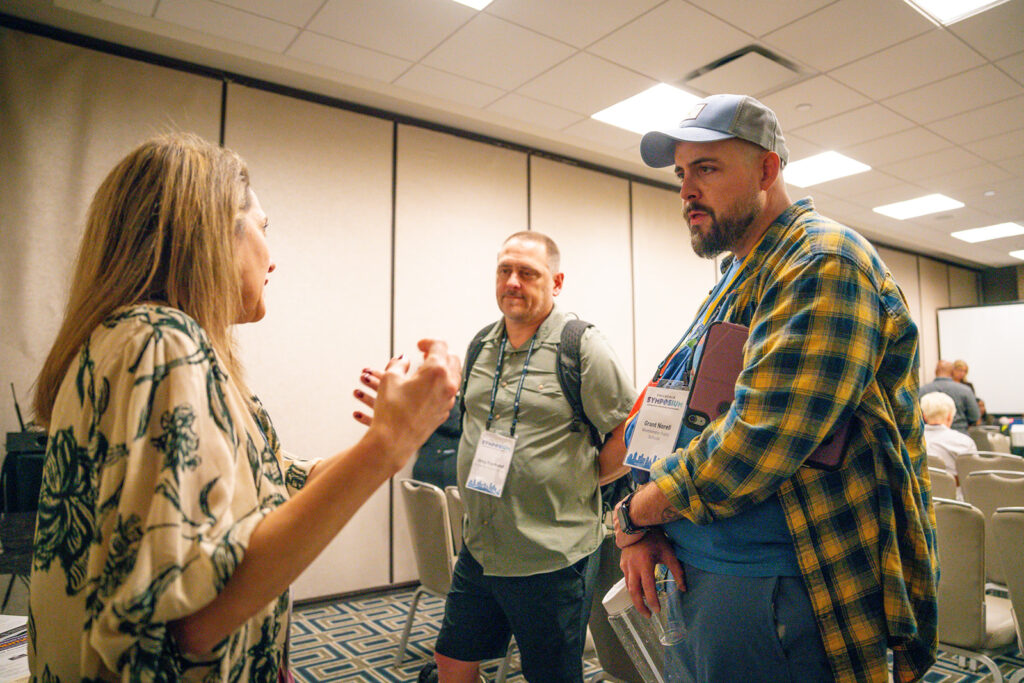
FullScale’s Symposium State Policy Roundtable on Building A Student-Centered High School Ecosystem was designed with this reality in mind. Rather than centering polished case studies or finished solutions, the roundtable prioritized collective sense-making. It created space for state and district leaders to step back, compare approaches, and examine where high school transformation is headed.
In partnership with the Education Commission of the States (ECS) and the Council of Chief State School Officers (CCSSO), we convened state- and district-level leaders from across the country to learn from policymakers from Kentucky, North Dakota, Washington, Indiana, and Louisiana who are actively pulling different policy levers to improve the design of their high school ecosystems. Representing portfolios that span graduation policy, accountability, instructional design, and implementation, participants came together with shared learning as the goal, participants surfaced patterns, tensions, and early signals to inform decisions already underway.
That structure—pairing state-level vision with district-level reality—allowed leaders to test ideas against implementation conditions and learn from one another in real time.
What State Leaders Are Learning Together About High School Transformation
As state and district leaders examined high school redesign efforts across contexts, several shared insights emerged.
High School Transformation Requires Coherence Across Policy Levers
Leaders emphasized that meaningful redesign does not happen through a single policy change. Progress accelerates when graduation requirements, instructional models, accountability systems, and pathways are aligned around shared definitions of student success.
As Alissa Muller, Director of Policy of the Washington State Board of Education, and Seema Bahl, Associate Director of the Mastery-based Learning Collaborative, described, expanding mastery-based learning required parallel work to clarify graduation pathways and make existing flexibilities more visible to students and families. Similarly, Scott Bess, member of the Indiana State Board of Education, reflected on how revisions to Indiana’s graduation requirements surfaced deeper questions about how employability skills, postsecondary readiness, and academic expectations are defined and communicated across the system. Across contexts, leaders noted that when these levers move out of sync, districts receive mixed signals about what matters most, slowing implementation.
Implementation Capacity Is a Policy Decision
Leaders consistently returned to the idea that policy language alone does not change student experience. What matters just as much is whether states invest in the conditions that allow districts and schools to act.
Dr. Rob Collins, Innovative Programs Consultant at the Kentucky Department of Education, described how Kentucky’s local accountability work emphasized narrative evidence and local context alongside traditional measures, an approach that required shared tools, guidance, and ongoing support, not just flexibility. In Louisiana, Timberly Monaghan, Executive Director of Fast Forward at the state’s Department of Education, noted that updates to accountability systems only gained traction when districts were supported to align instructional practice with new readiness indicators. Across states, guidance, coaching, and feedback loops became core policy mechanisms rather than implementation add-ons.
Redefining High School Readiness Forces Explicit Tradeoffs
As states move beyond seat time and narrow academic measures, leaders are confronting difficult questions about what counts as readiness and how it should be demonstrated.
In Indiana, Scott Bess emphasized the tension between creating multiple graduation pathways and ensuring students remain visible within accountability systems rather than disappearing into aggregate reporting. In Washington, Muller and Bahl similarly raised questions about how expanded choice and applied learning opportunities interact with advising capacity and postsecondary signaling. Across states, leaders acknowledged that redefining readiness requires explicit choices about flexibility, guardrails, and accountability.
District Perspectives Clarify What Policy Looks Like in Practice
Including district leaders shifted the conversation from intent to operational reality.
Ann Ellefson, Director of Academic Support at the North Dakota Department of Public Instruction, described how the state has used policy flexibility to support districts in designing innovative learning models, including school-within-a-school approaches intended to better serve students whose needs were not being met by traditional structures. She emphasized that these models require states to think beyond authorization and focus on the practical conditions schools need to redesign schedules, staffing, and supports.
Building on that perspective, Dan Pfaff, Director of Curriculum, Instruction, & Assessment for Shelby County Public Schools in Kentucky, reflected on how similar policy flexibility plays out at the district level. He shared how local accountability and Portrait of a Graduate efforts pushed districts to rethink advising structures, pathways, and instructional approaches, surfacing real constraints around capacity, staffing, and consistency across student experiences.
Together, these perspectives reinforced a shared lesson: policy rarely works when it arrives as an outside idea. Meaningful redesign depends on early district engagement, attention to operational realities, and treating implementation as a core design challenge rather than a downstream concern.
These Conversations Matter Now More Than Ever
The State Policy Roundtable highlighted a simple reality. No single state has fully solved the challenges of high school transformation, yet many are further along than they realize. Progress accelerates when leaders have opportunities to learn together.
As states take on greater responsibility for coherence and direction, leaders need spaces that support real sense-making across contexts—spaces where they can compare approaches, surface tradeoffs, and learn from one another before decisions are locked in or scaled statewide.
These conversations help move the field beyond isolated experimentation. They make it easier for states to build on one another’s strengths, avoid repeating costly mistakes, and navigate complexity with greater intention. When policy decisions carry long-term consequences for students and communities, the ability to learn together becomes a critical component of effective state leadership.
An Invitation
As FullScale continues to build future learning spaces—and begins planning for next year’s State Policy Roundtable at Symposium—we want to stay grounded in the challenges state leaders are navigating now. If there are problems of practice, policy areas, or emerging questions you would value exploring alongside peers from other states, we’d love to hear from you. These conversations are strongest when they reflect the work leaders are doing now and the decisions ahead.