
Earlier this year, more than 100 school and district teams from 34 states applied to participate in FullScale’s Rural AI Strategy Lab—a learning network supporting schools and districts to design, test, and share practical, equitable uses of AI—grounded in rural realities. Their applications reflected both widespread interest in AI and a desire to approach it with solutions grounded in the priorities, values, and realities of rural communities.
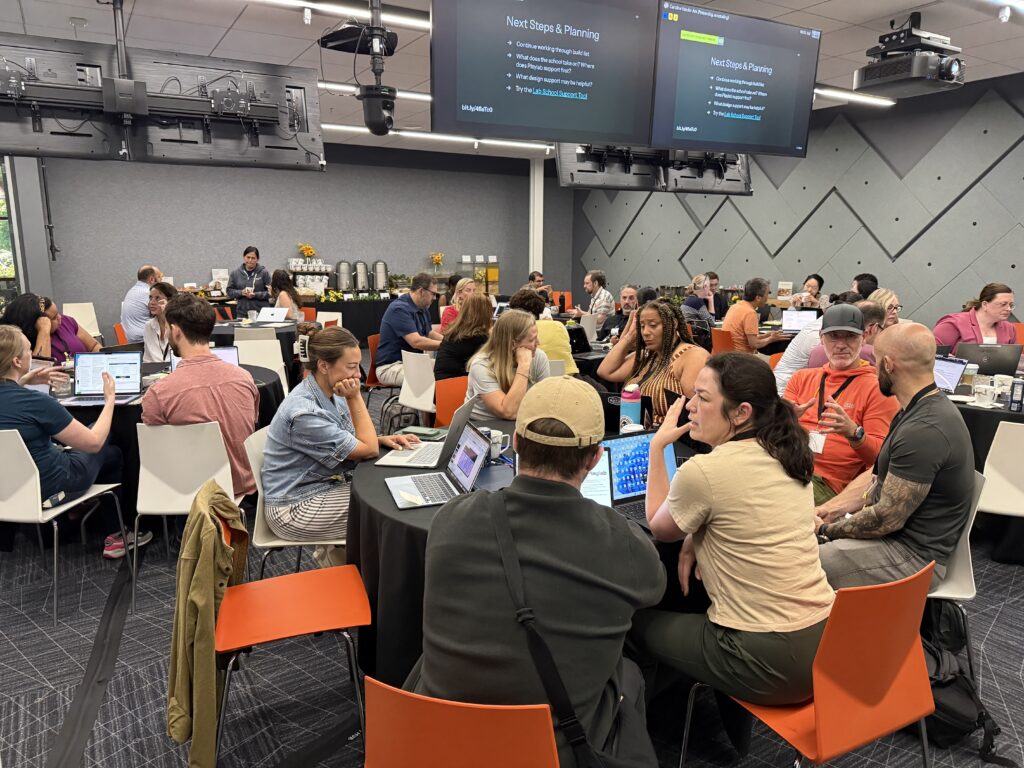
In April, we welcomed 13 teams into the Lab. Over the last several months, they have worked together to better understand the challenges facing their students and educators, explore where AI could help, and design solutions responsive to what they learned.
Now, those ideas are moving into action: Rural AI Strategy Lab teams have officially launched their pilots!
Moving from a Local Challenge to a Solution Pilot
Teams began the Strategy Lab by identifying an authentic challenge they were experiencing in their schools and communities, with AI introduced later as one potential way to address it. While each challenge was specific to its local context, three common themes emerged across the cohort: Differentiation and Inclusive Instruction, CTE and Postsecondary Planning, and Instructional Design and Decision-Making.
Using FullScale’s Real-Time Redesign process, teams moved through a series of structured steps:
- Come Together: Teams examined their local context, identified a priority challenge, and developed plans to learn directly from the people experiencing it.
- Dream Big: Teams conducted discovery research, identified root causes, defined a user-centered problem, and selected an AI-enabled solution.
- Start Small: Teams developed prototypes, gathered feedback, and designed pilot and measurement plans.
This process helped teams resist the understandable urge to jump directly from a challenge to a fully formed solution. In many cases, teams substantially changed what they decided to build based on what they learned through interviews, observations, and other discovery research. The result is a set of pilots that respond to specific needs students, educators, and communities identified.
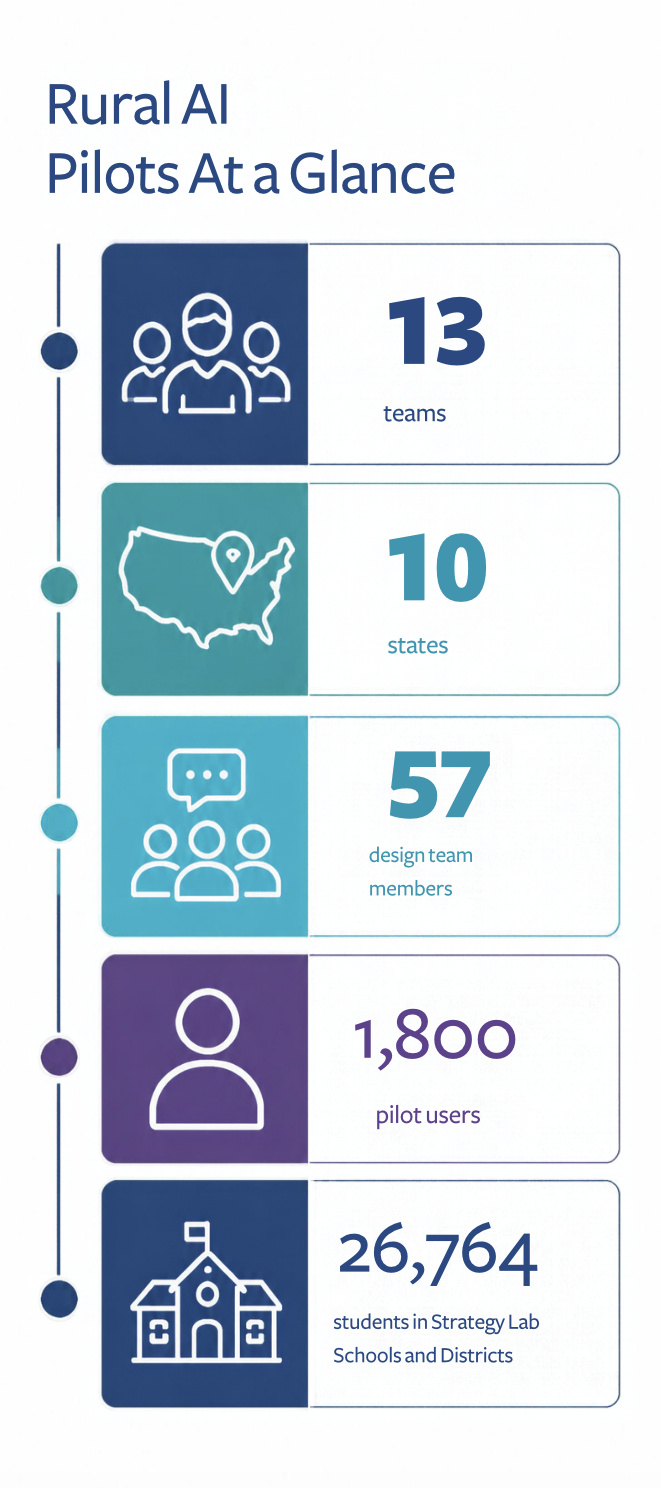
One early finding is particularly striking: 12 of the 13 teams designed their own AI tools to enable their solutions. These tools range from helping teachers adapt curriculum and scaffold instruction to supporting student career exploration and engagement. Rather than simply adopting existing tools, these educators are becoming designers and technologists, building around their instructional goals and local needs. At the same time, their experiences are surfacing important questions about what it takes to make those tools secure, functional, affordable, and sustainable.
What Teams Are Testing
Each pilot begins with a clearly defined user-centered problem and a solution designed in response. Some examples included:
| User-Centered Problem | Pilot Solution |
| High school teachers are not yet able to consistently differentiate instruction for students with diverse learning needs, including multilingual learners, because multiple course preparations, limited time to plan together, and a lack of practical strategies and structures make engaging small-group instruction difficult to design. | Four high school teachers will pilot a Differentiation Bank Gemini Gem that recommends practical, research-based UDL strategies and resources they can adapt for lesson planning and use with diverse learners. |
| High school students need clearer, locally relevant ways to connect their academic progress, current course trajectories, interests, and available opportunities to realistic post secondary pathways and next steps. | Approximately 45 tenth-grade students will pilot a local LLM planning tool that draws on their academic records, college costs and admissions profiles, CTE and dual-enrollment options, expected salaries, local economic outlooks, and scholarship and leadership opportunities to suggest individualized postsecondary pathways. |
| Teachers are not yet consistently able to translate assessment data into flexible, data-informed small-group instruction because they lack simple, consistent tools that connect available data to daily instructional decisions. | Three elementary teachers across grades 3, 4, and 5 will use the AI-powered Instructional Planning Center to identify mastery patterns, priority standards, and student groups, then connect those needs to curriculum resources and AI-generated, standards-aligned lesson ideas. |
Across the teams’ user-centered problems and solutions, three themes emerged that reflect common challenges in rural schools: differentiation and inclusive instruction, CTE learning and postsecondary pathways, and support for teachers’ everyday decisions. Teachers need ways to meet a wide range of learning needs while managing the demands of daily planning, and students need help seeing how their learning connects to futures available to them. Teams have designed different solutions around those needs and are now testing them in small implementation pilots. They will pair quantitative data with observations and user feedback to understand what is working and what to adjust in the next iteration.
Learning Alongside Rural Educators
These intentionally small pilots are designed to help teams learn before expanding their solutions – and generate insights for other rural schools and districts exploring similar opportunities.
In January, FullScale will publish the Rural AI Toolkit, including the Real-Time Redesign activities teams used, examples from their work, practical implementation resources, and lessons about designing and testing AI-enabled solutions in rural contexts. We look forward to sharing what teams discover.
Want to learn more about the Rural AI Strategy Lab, the participating school teams, and their solutions? Sign up for our newsletter to stay in the loop and join us for the Rural AI Pre-conference at the 2026 Symposium for a showcase of the entire network’s tools! Attendees will hear what teams designed, explore what they are learning from implementation, and consider how these early lessons can inform responsible and locally grounded AI adoption across rural Education.
For more, see: