The Challenge
Widespread, persistent gaps in K-12 learning remain one of the most urgent challenges to solve. It’s time to get serious about tackling them, with new tools and more durable and sustainable strategies to accelerate learning at the very core of the student experience. Together, we can spur the adoption of evidence-based practices and system capabilities necessary for equity, today and in the future. Our kids deserve nothing less.
How We’re Accelerating Progress.
The arrival of artificial intelligence offers significant potential to change how we teach, learn, and organize schools. Yet, most of the applications gaining traction today focus on efficiency within existing systems—reinforcing traditional models built on rote instruction, rigid scope and sequences, grades, and seat time.
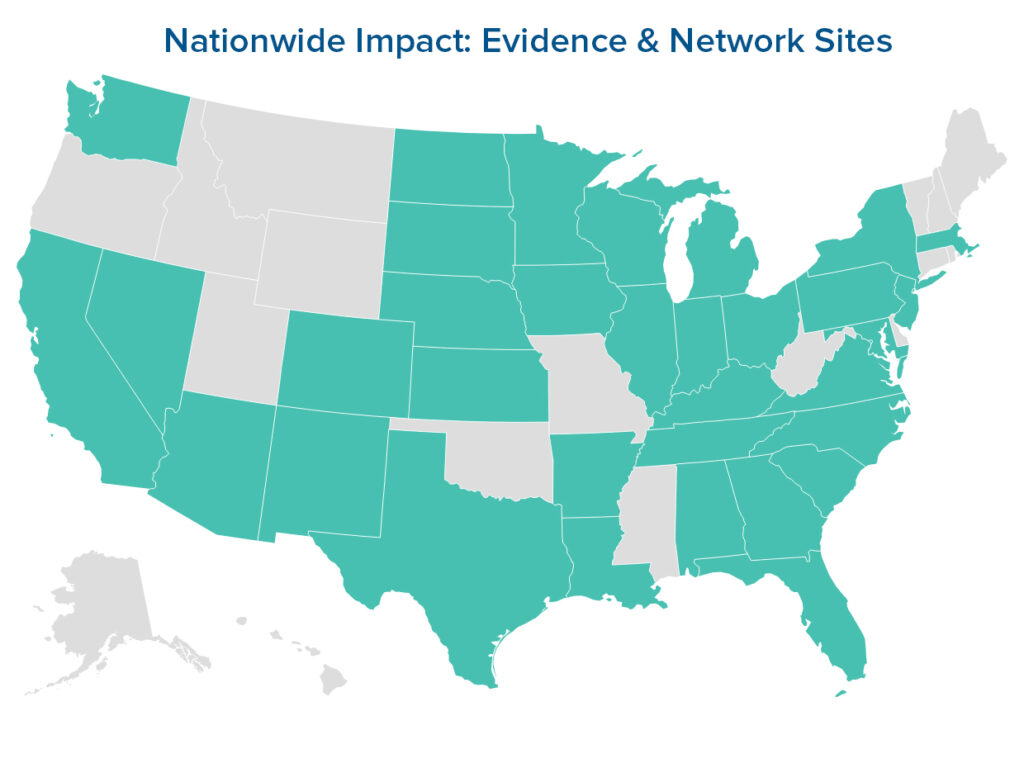
FullScale is teaming up with a network of technology, school system, and research partners to better understand and scale innovative learning acceleration approaches to address those challenges and improve outcomes for kids. This work is taking shape in three ways:
Accelerating Adoption and Evidence at Scale
We’re speeding up the adoption of existing core-classroom learning acceleration approaches, supporting 10 networks led by technology and support providers as they seek to scale their programs and build rigorous evidence in implementation.
The Accelerating Adoption Network
ASU Preparatory Academy
ASU Preparatory Academy (ASU Prep) is scaling “Archie,” an AI-powered tool embedded in their online math practice platform, “Digit,” that uses advanced technologies such as large language models, machine learning, and natural language processing to deliver personalized, real-time feedback, helping students understand Algebra 1 math concepts more effectively.
Learning Opportunity: In what way can AI complement existing virtual/hybrid learning programs to drive math learning acceleration?
Building 21
Building 21 is scaling an AI Project Builder, which offers step-by-step guidance to students to design personalized projects aligned with competencies and performance levels, and an AI Feedback Tool, which provides immediate, actionable feedback on student projects via the Beacon platform, enabling revisions and skill improvement. These two innovations are seeking to enhance and accelerate learning outcomes in English Language Arts (ELA).
Learning Opportunity: What does powerful ELA acceleration look like in 6-12, competency-based PBL environments?
Coursemojo
Coursemojo is scaling Mojo, which offers the only AI-powered supports aligned to specific high-quality ELA curricula. Mojo takes the static texts and assignments from the High Quality Instructional Materials (HQIM) and transforms them into highly-interactive, differentiated experiences for students, offering them personalized affirmation and feedback and the next “just right” question to push their thinking. Mojo also supports teachers with a live dashboard showing how every student is doing on every question, suggested discussion questions based on areas of misconception, grading support, and trend analysis over time in student work.
Learning Opportunity: How can virtual AI solve the implementation gap for ELA High-Quality Instructional Materials?
Lab School of Memphis
The Lab School of Memphis is scaling its microschool instructional framework called the “Hit Pit” which leverages best practices for high-intensity tutoring (HIT) and personalized independent tasks and teaching (PITT) to strengthen core instruction and produce tailored, flexible, and supportive learning environments that engage the whole learner.
Learning Opportunity: How can satellite campuses, supported by virtual tools and instructions, effectively serve families seeking more flexible learning environments?
LEAP Innovations
LEAP Innovations is scaling their approach to helping schools implement and scale personalized learning through a strategic design-thinking model in which schools identify problems of practice, implement personalized learning strategies, and pilot a curated edtech product that specifically meets their needs. Through professional development, coaching, and regular on-site visits and virtual check-ins, LEAP is seeking to strengthen teacher practices and improve student outcomes in targeted learning areas based on school need.
Learning Opportunity: How can a redesigned network use tools to accelerate learning redesign classrooms for durable, systemic change across a school site?
Magpie Literacy
Magpie Literacy is scaling their K-2 digital reading foundations tool that delivers technology-based instruction grounded in the science of reading and responds directly to students’ unique needs. Magpie’s innovation addresses all of the “Big 6” components of evidence-based literacy instruction in ~40 minutes per week through instructional videos and games. As Magpie expands, their innovation will grow to serve students in grades K-8.
Learning Opportunity: In what ways does a validated early literacy tool allow teachers to work differently with students in classrooms?
MindPrint Learning
MindPrint Learning is scaling their intervention and acceleration platform that integrates data from an online, cognitive assessment with school achievement data to provide the most effective personalized strategies. The MindPrint solution enables schools to efficiently and affordably identify student learning strengths and support teachers to effectively use this data to improve outcomes in math, reading, behavior. and executive functions.
Learning Opportunity: How does focusing on cognitive intervention and support accelerate learning across a range of subjects?
PowerMyLearning
PowerMyLearning is scaling their math practice tool, bringing their “Family Playlist” model into the classroom. The math practice tool, PowerMyLearning Playlists, supports students in grades K-2 with mathematical discourse and sensemaking skills, emphasizing problem-solving processes, discussion, and reasoning through curriculum-aligned, hands-on learning games. In each lesson, students record short videos of their responses to discussion prompts which teachers can use as formative assessments to determine next steps for instruction and to accelerate individual student learning.
Learning Opportunity: How might a product that effectively “bridges” school and family learning accelerate math outcomes?
Rock by Rock
Rock by Rock is scaling their project-based learning platform, an online library of fully planned, interdisciplinary project-based learning experiences and on-demand training for teachers that supports literacy, science and life-habit development for students in grades K-5. Rock by Rock projects leverage core science of reading principles to catalyze literacy development through a blend of online and hands-on learning that empower students to solve real-world problems while also fostering durable, career-ready skills that students need to thrive in life.
Learning Opportunity: How can high-quality, virtually supported Project-Based Learning literacy curriculum dramatically improve outcomes for students learning in non-traditional school environments?
University of Kentucky Center For Next Generation Leadership
UK NXGSN is scaling their dual credit program (UK Next Generation Scholars) to include a Deeper Learning Early College (DLEC) model which focuses on supporting schools to increase the development of dual credit programs that provide rigorous and relevant college courses, college level advising and mentoring, and high school supports for deeper learning initiatives. UK NXGSN is also scaling their approach to expanding dual credit access to more high schools by utilizing technology to deliver courses in flexible synchronous formats by qualified teachers and University of Kentucky faculty, to increase instructional supports for students, and is pursuing less restrictive admissions policies.
Learning Opportunity: How can fully virtual, deeper learning dual credit courses accelerate and increase enrollment and outcomes for high school students while also spurring more innovative schedules and resource use statewide?
Building Stronger Understanding of Innovative Models
To build rigorous evidence showcasing how high-quality virtual and hybrid models accelerate learning for students, we are conducting a mixed-methods research study of six virtual and hybrid models from across the United States. This evidence will support other school leaders in better understanding how similar approaches could be adapted to accelerate learning for different types of learners and shift the national narrative around virtual and hybrid learning.
Friendship Online Academy
A virtual public charter school for K-8 students, the only approved online school in Washington, D.C., and an online academy for 9th-12th graders based at Friendship Collegiate High School. Read Friendship’s Profile here.
St. Vrain’s Advanced Global Interactive Learning Environments
A hybrid and fully remote learning model that serves K-12 students in Colorado. Read St. Vrain’s Profile here.
Novi Virtual
Novi Community School District in Novi, MI, includes a virtual program for K-12 students.Read Novi’s Profile here.
Bismarck Public Schools Empower[Ed]
A hybrid program for 11th and 12th grade students attending Bismarck Public Schools.Read Bismarck’s Profile here.
Building Conditions for Broader Success
To generate evidence about efficacy as well as the conditions that support implementation and scale, we’ll be working across the broader field, connecting efforts, disseminating learnings, informing policy, and building a strong coalition for change.
Through this initiative, we’re generating new opportunities for hundreds of thousands of students and new understanding for decisionmakers across the education sector.
Reports & Publications
Across K–12, there’s growing emphasis on building durable skills and competencies—through Portraits of a Graduate, mastery transcripts, and broader aims for learning. In the workforce sector, there’s parallel momentum around modular credentials, skill-based hiring, and clearer navigation for career advancement. Yet, these efforts often run on separate tracks.
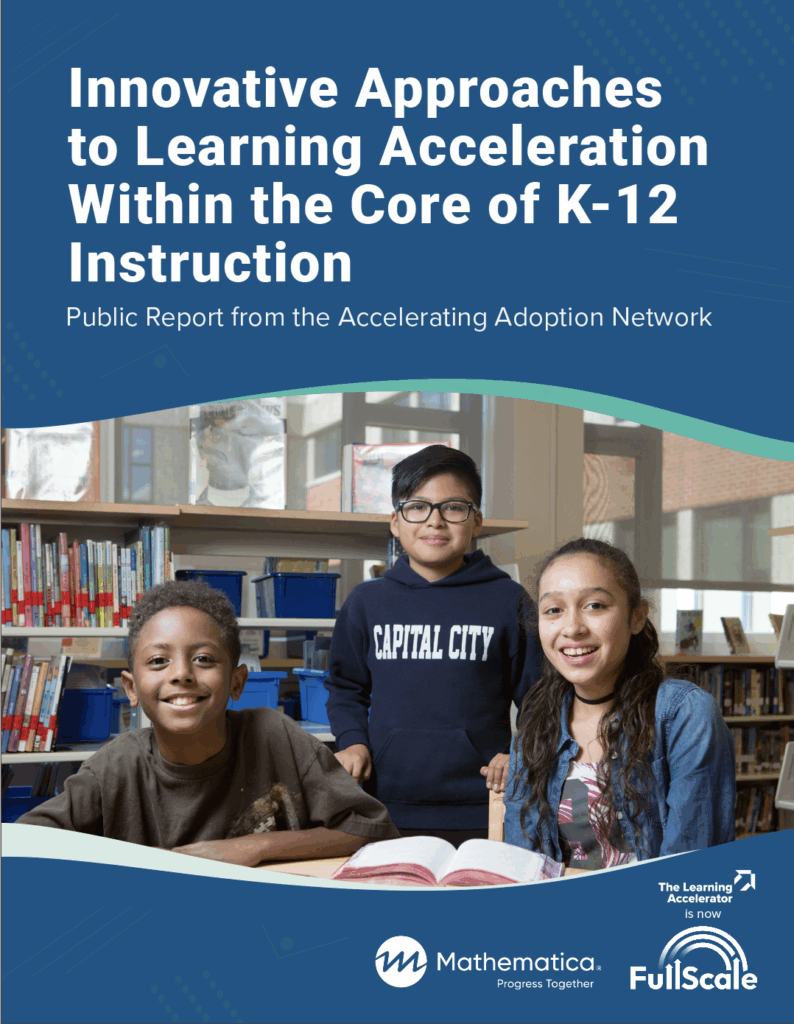
Innovative Approaches to Learning Acceleration Within the Core of K-12 Instruction: Public Report from the Accelerating Adoption Network
To understand the implementation and impact of the 10 networks participating in FullScale’s Accelerating Adoption Network, Mathematica evaluated how the technology-enabled innovations accelerated student learning as they scaled. This final report synthesizes findings from across the networks, providing critical data on the initiative’s impact and effectiveness.
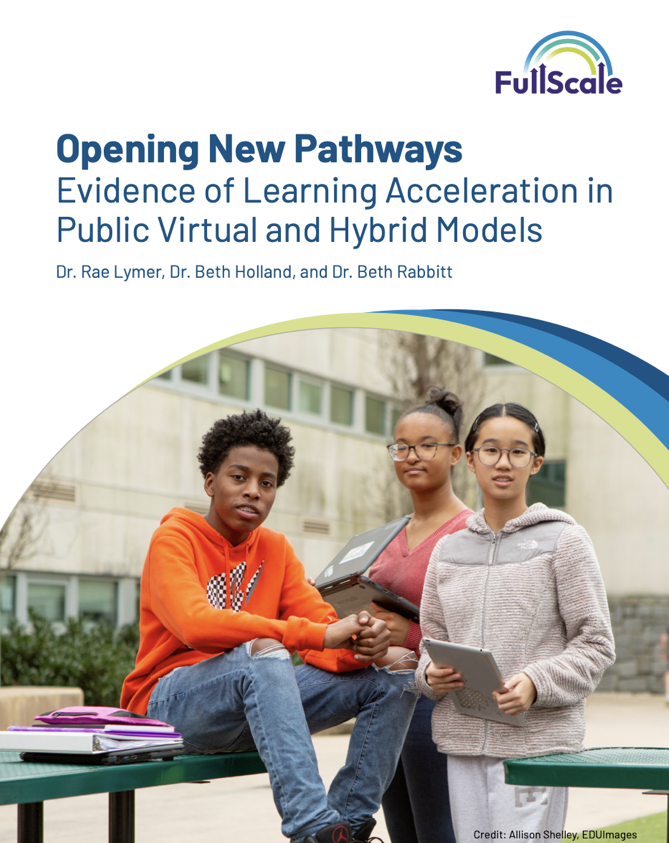
Opening New Pathways: Evidence of Learning Acceleration in Public Virtual and Hybrid Models
This paper explores how public schools, when given the space to innovate, align with community needs, and measure what matters, can design high-quality virtual and hybrid models that accelerate student learning.
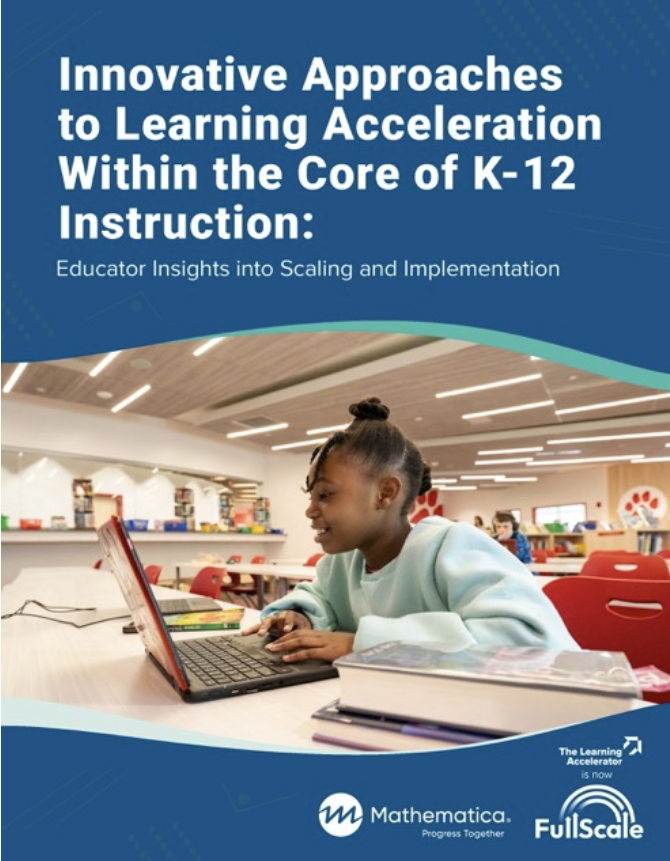
Innovative Approaches to Learning Acceleration Within the Core of K-12 Instruction: Educator Insights into Scaling and Implementation
This second brief from FullScale (formerly operating as The Learning Accelerator), “Innovative Approaches to Learning Acceleration Within the Core of K-12 Instruction: Educator Insights into Scaling and Implementation,” shares on-the-ground perspectives from educators participating in FullScale’s Accelerating Adoption Network. Building on initial observations from Mathematica’s evaluation, this brief explores what educators actually experienced as they worked to scale the adoption of 10 technology-enabled innovations designed to accelerate student learning within core instruction.
Building a Stronger Understanding of Innovative Models: Early Learnings
“Building a Stronger Understanding of Innovative Models: Early Learnings” surfaces five key themes from early data that illuminate what quality looks like in five virtual and hybrid models.
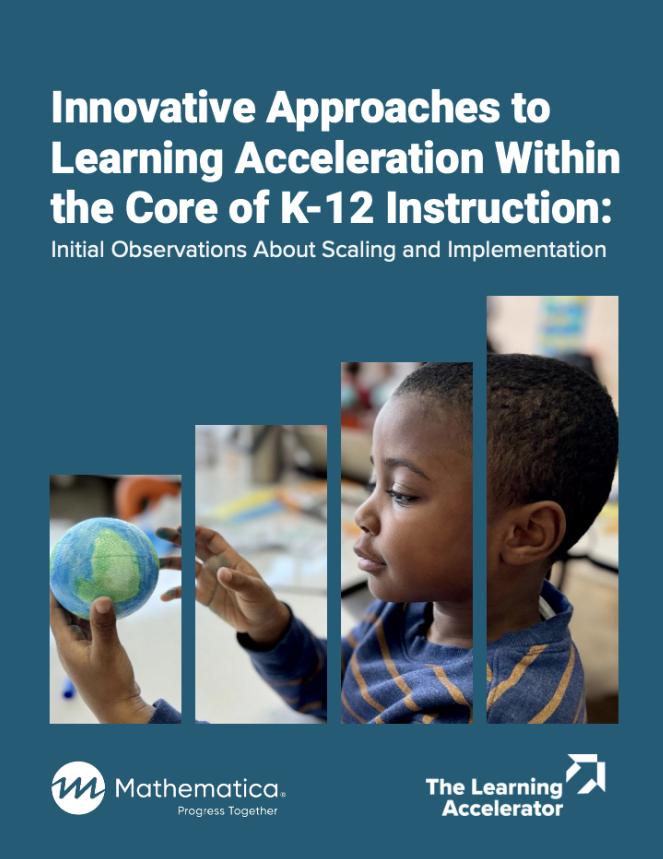
Innovative Approaches to Learning Acceleration Within the Core of K-12 Instruction: Initial Observations About Scaling and Implementation
This brief, “Innovative Approaches to Learning Acceleration Within the Core of K-12 Instruction: Initial Observations About Scaling and Implementation,” presents early learnings from Mathematica’s evaluation of FullScale’s Accelerating Adoption Network, an initiative to scale the adoption of 10 technology-enabled innovations designed to accelerate student learning from within the core of instruction.
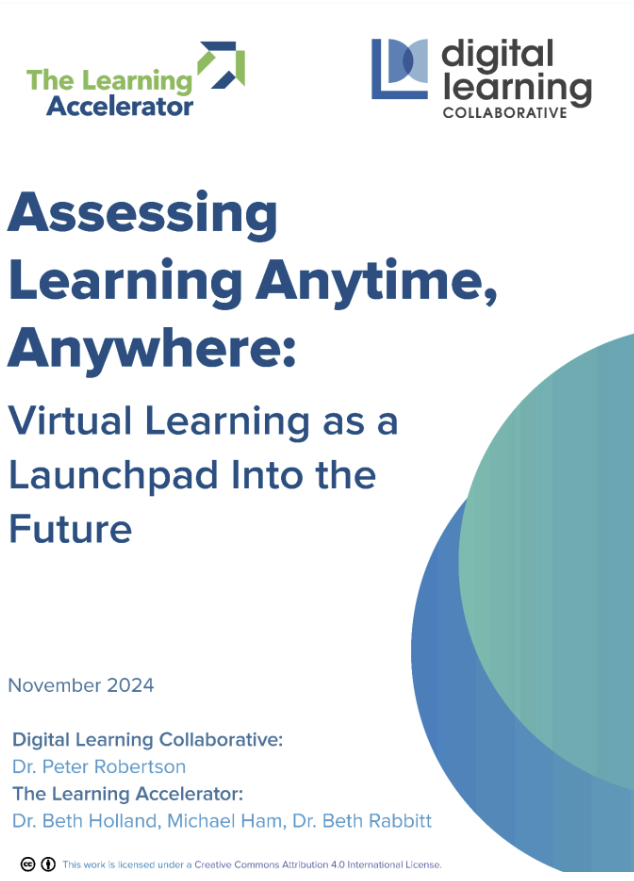
Assessing Learning Anytime, Anywhere: Virtual Learning as a Launchpad Into the Future
This paper, created in collaboration with the Digital Learning Collaborative, outlines how we can reimagine assessment to gain meaningful, actionable insights regardless of where, when, or how students learn.
Also, explore these briefs designed specifically for school leaders and state leaders with tailored insights and recommendations.
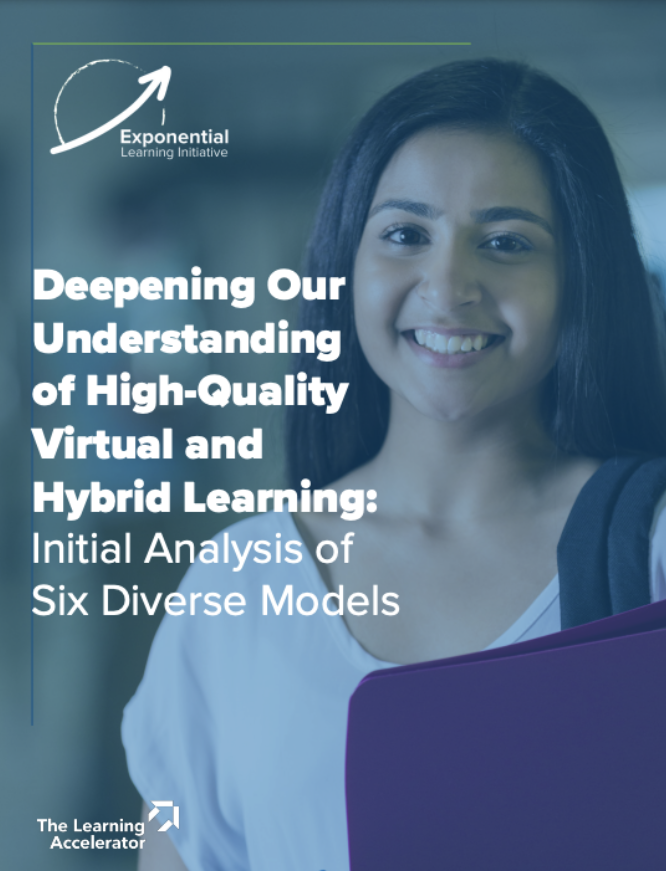
Deepening Our Understanding of High-Quality Virtual and Hybrid Learning: Initial Analysis of Six Diverse Models
“Deepening Our Understanding of High-Quality Virtual and Hybrid Learning: Initial Analysis of Six Diverse Models,” explores six promising virtual and hybrid learning models, highlighting their design, goals, and impact on student learning acceleration.
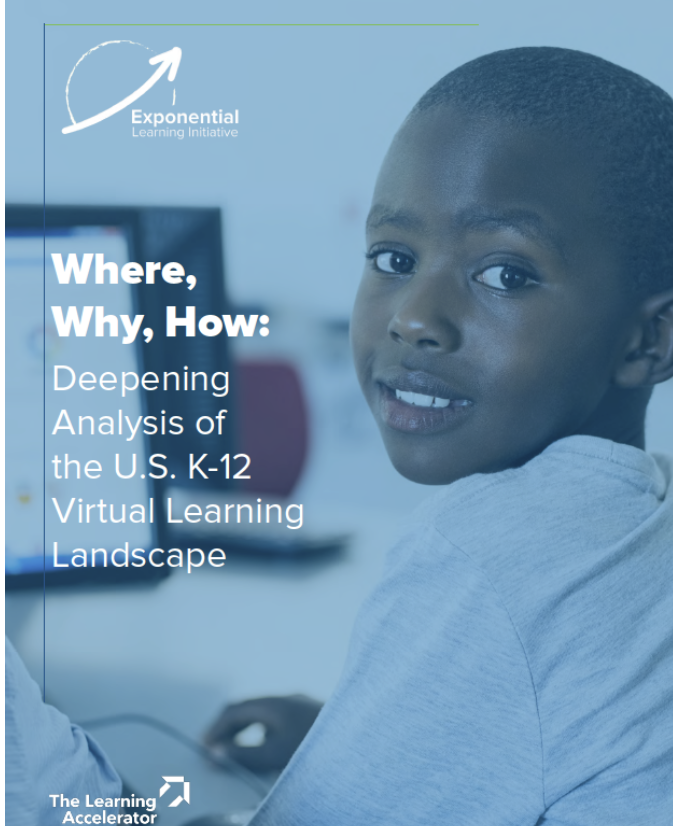
Where, Why, How: Deepening Analysis of the U.S. K-12 Virtual Learning Landscape
“Where, Why, How: Deepening Analysis of the U.S. K-12 Virtual Learning Landscape,” explores the current state of virtual and hybrid learning models across the United States and their viability as a tool to expand access to high-quality education for students across the country.
Webinars with Education & Technology Experts
FullScale convenes technologists, researchers, and educational experts to discuss learning acceleration strategies, tools, and models in classrooms and systems. Watch videos from our Exponential Learning Initiative webinar series.
Through this initiative, we’re generating new opportunities for hundreds of thousands of students and new understanding for decisionmakers across the education sector.