
In the early 1970s, a group of disability activists in Berkeley, California grew tired of waiting. The city’s sidewalks ended in sheer curbs that made it impossible to cross a street in a wheelchair. So, one night they showed up with sledgehammers and a bag of concrete and poured their own ramps. This community-innovated approach turned out to help far more people than the activists who fought for it, from parents pushing strollers, to travelers dragging suitcases, to delivery workers with hand trucks, to kids learning to ride their bikes. Urban designers eventually gave the pattern a name. They call it the “curb-cut effect,” which when solutions built for people at the margins end up serving everyone.
The digital world often runs on curb cuts we’ve stopped noticing. Closed captions were built for people who are deaf or hard of hearing. Now, they run silently in every gym and airport and across most of the videos our students watch. Voice control and text-to-speech began as accommodations and quietly became conveniences everyone uses. The features the rest of us now reach for without thinking were, more often than not, designed first for someone we weren’t thinking about at all.
We start here because it names something education keeps getting backwards. When we think about scalable education solutions, we often start with the needs of the major market. Innovation starts with scale demand, flowing from the large, well-resourced, and well-connected and then outward to everyone else. In that story, the big suburban district or the well-capitalized ed-tech company invents the future. Under-resourced, small, rural, or alternative schools and districts are the last stop. They’re the end beneficiaries, the eventual adopters, the outliers who will get there once the good ideas finally trickle down. This tidy story is also mostly wrong.
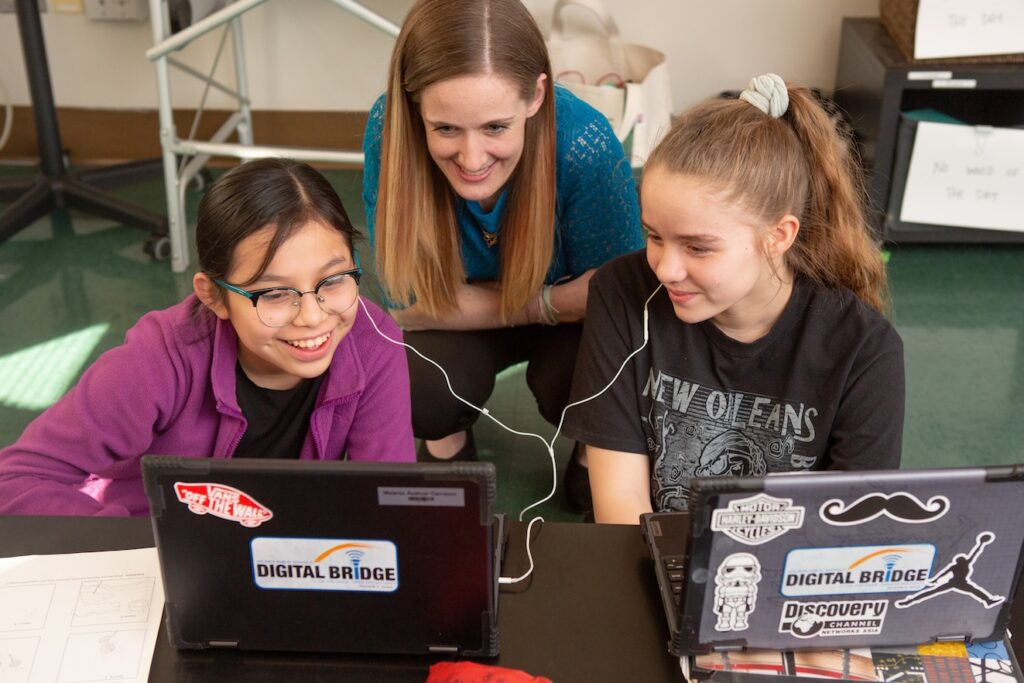
We were reminded of this again this year when our team completed a landscape scan of how rural schools are actually using AI. Small in individual scale, rural schools educate nearly one in five American students and make up more than half of the country’s school districts. By familiar logic, they should be AI’s laggards given smaller budgets, fewer specialists, and staff who wear four hats before lunch. What our team found instead was some of the most creative and, importantly, most coherent AI adoption anywhere in the country.
The reason is structural. In a rural system, there are very few layers between the person making a decision and the classroom where it lands. A superintendent in Pennsylvania told us that she watches what her teachers are doing, vets it, and then builds shared expectations with them directly. No standing committee, no six-month rollout, no game of telephone between the central office and the building. We came to think of these systems as compressed laboratories: close relationships, short distances between a decision and its practice, and enough community trust to try something and adjust it fast. The very conditions we assume hold rural schools back (smallness, tight budgets, compressed roles) are often exactly what let them move with a coherence that larger systems spend years and consultants trying to manufacture.
In other words, the constraint isn’t the obstacle to innovation. Rather, the constraint is the reason it works.
Once you start looking, the pattern turns up everywhere. Much of what we now call competency-based learning (students advancing based on demonstrated mastery rather than seat time, personalized pathways, projects rooted in the real world) was pioneered decades ago in alternative and innovative schools, the places built for the students the traditional system had already counted out. They were solving a problem no one else would touch, and in the process they worked out practices that mainstream high schools are only now getting around to piloting. The margins were the research-and-development lab.
This is also the insight at the heart of Universal Design for Learning: when you design for the learners at the edges (the student who can’t access the material the usual way, the school without the usual resources) you almost always build something better for the students in the middle, too. Designing for the margins is a strategy for everyone.
So what does this ask of us? Mostly, it asks us to change where we look and who we support. If the future of learning is already here and merely unevenly noticed, then getting better at noticing may be the most important work we can do.
So we’ll offer a small discipline for anyone serious about the future of learning: before you look to the center for the next big idea, look to the margins first. Spend real time in the rural district, the alternative school, the under-resourced program quietly solving a problem the rest of the field hasn’t yet figured out how to name. Ask what they’ve built out of necessity, and what it might make possible for everyone else.
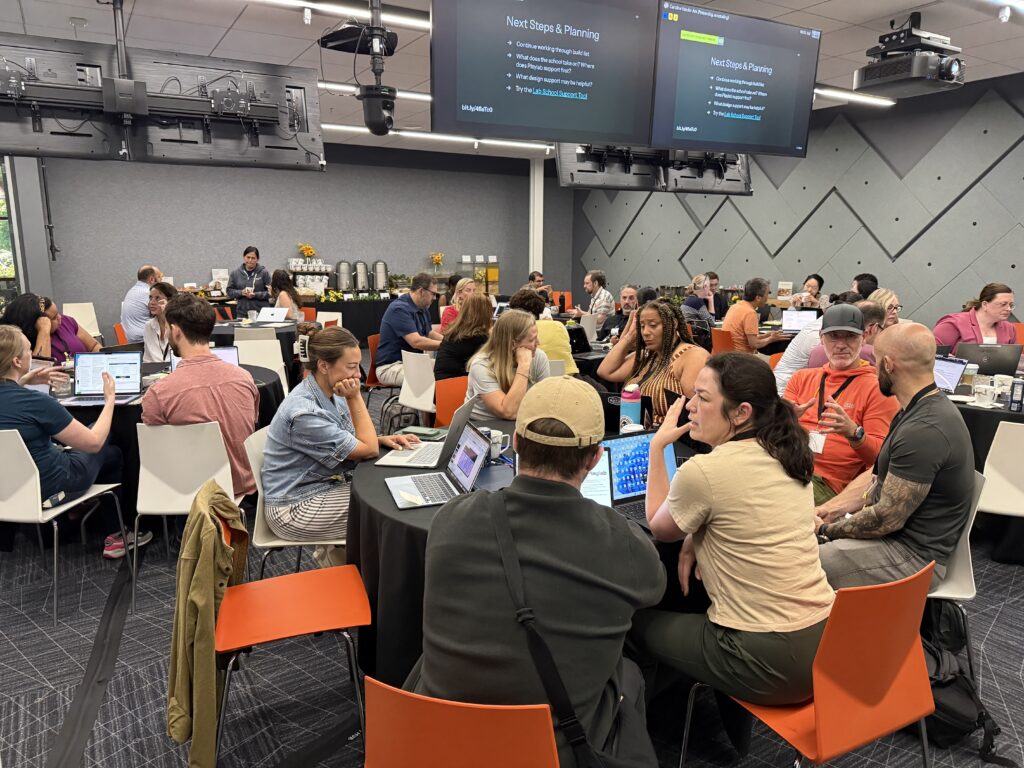
We see this same pattern each year in the learning communities that gather at the FullScale Symposium. They come carrying the weight of shrinking budgets, political headwinds, staffing shortages, and accountability systems that often fail to recognize the kinds of learning they are making possible for young people. And yet, they keep building. Their work is another reminder that innovation doesn’t happen despite the margins. More often, it emerges because of them. When these communities come together, the real opportunity isn’t simply to share promising practices. It’s to notice patterns, connect isolated breakthroughs, and turn individual innovation into collective learning.
That’s where more of our time is going these days. Our full landscape scan, AI in Rural Schools: What We’re Seeing in Practice, is the first of what we hope will be many looks at learning in the places we too often overlook. If you’re doing this work — especially if no one has thought to ask you about it yet — we would love to hear from you.