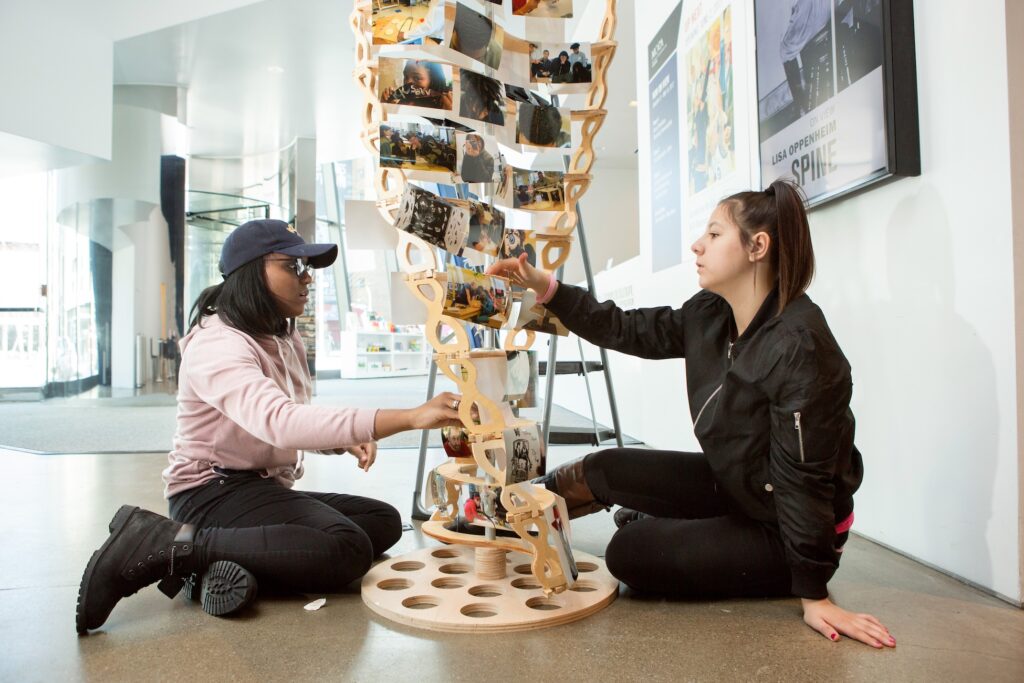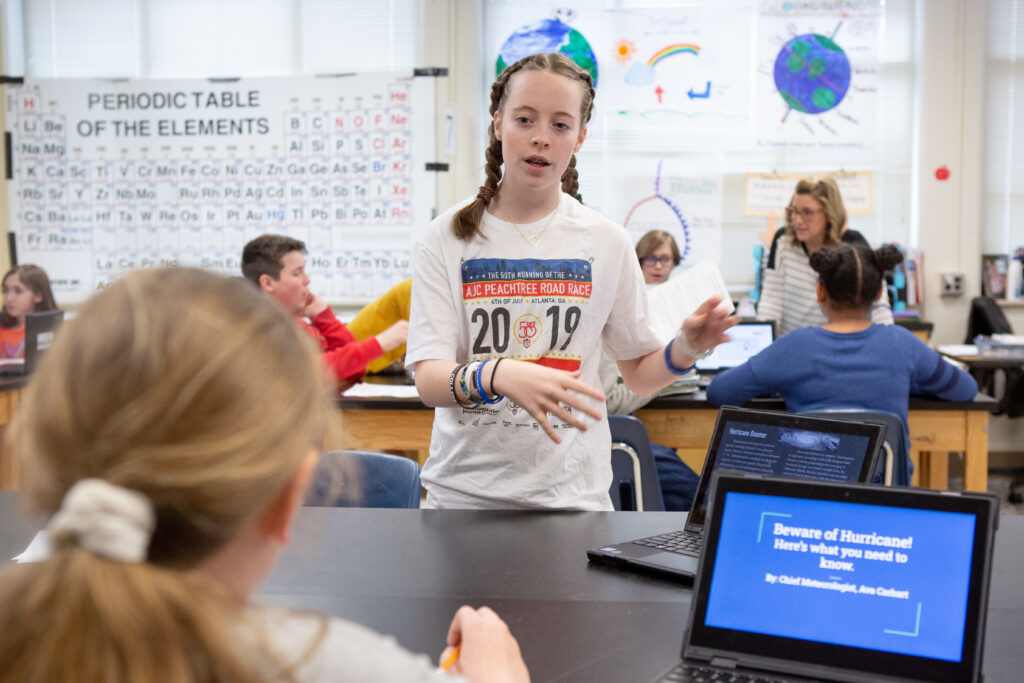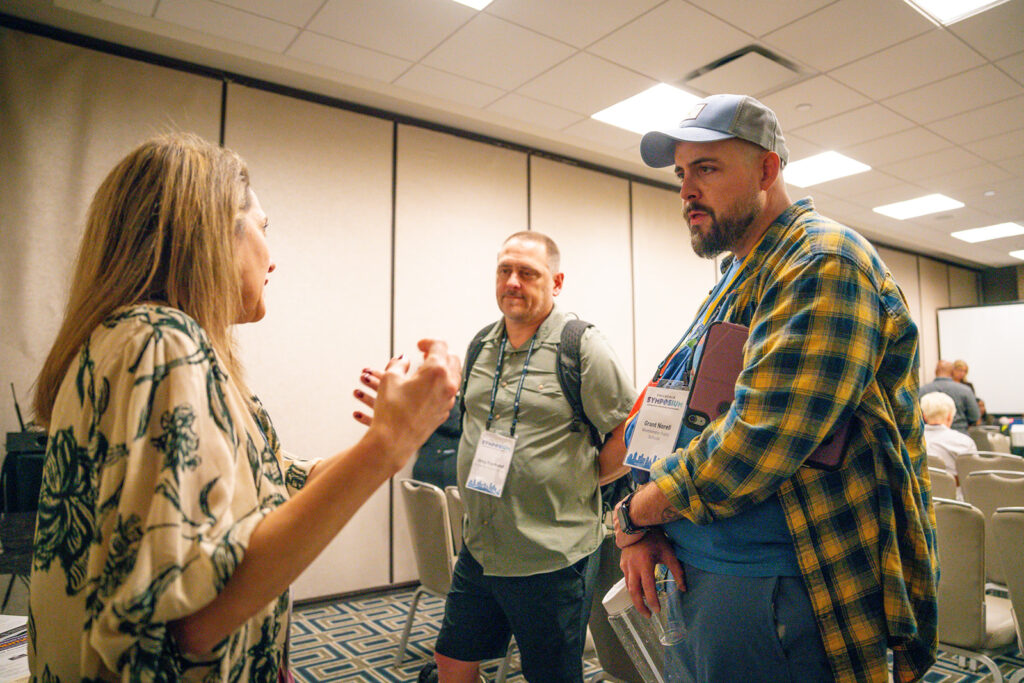

FullScale exists to accelerate a bold vision for learning: a future where every young person reaches their full potential through education that is personalized, whole-self-developing, and competency-based. Formed through the merger of The Learning Accelerator and the Aurora Institute, we build connective tissue across practice, policy, research, and progress—helping the field navigate complexity and act with greater coherence on behalf of every learner.
As we developed our first strategic plan, we spoke with more than 30 leaders across the country—district practitioners, state officials, researchers, technologists, funders, and operators—and asked what forces are shaping the future of K–12 public education. Four rose to the top:
- AI is an existential disruption—not a question of whether we respond, but how we shape the future with equity and care.
- Deep disconnection and polarization are fracturing the field. We must work harder than ever to bridge gaps and find shared values on behalf of every kid.
- States are emerging as critical units of coherence amidst federal fragmentation.
- Communities are redefining what “quality” and even “public” education mean. We must take note.
We’ll be sharing more over the next few months on how this understanding is shaping our strategy. But in this piece, we wanted to focus on the final of these emerging forces.
Families and communities are calling for expanded measures of school quality to provide them the information they need to make important family decisions. Similarly, once they have that information, families are hungry for a broader set of publicly supported educational options. How should we as a sector respond?
First up, quality. For decades, improvement in public education has been tied primarily to standardized measures and compliance-driven accountability. Test scores, when used for purposes of learning, improvement, and equity of outcomes, remain important. But they are no longer sufficient to capture what families and communities expect from schools. A recent survey conducted by Great Schools reflects this finding – parents care about a far broader set of school inputs and outputs than test scores alone.
As one interviewee put it, schools are facing existential questions about what they exist to do. That existential pressure is not only political but philosophical. The public is asking different questions:
- Does my child feel known and supported?
- Are they building durable skills and real-world competencies?
- Are they progressing based on mastery, not just moving along with a cohort?
- Are they prepared for citizenship and work in a world transformed by technology?
These questions are not new (indeed, we’ve grappled with them for hundreds of years). They align directly with FullScale’s stated belief that learning must be rigorous and personalized, grounded in science, and connected to real-world application. In nearly every innovative entity we are learning from—microschools in our Exponential Learning Initiative, hybrid and virtual models, district innovation programs—we see leaders necessarily prioritizing both traditional academic outcomes and a broader set of indicators: belonging, agency, speed of growth, and transferable competencies.
What we heard in interviews, and is supported by other field data, is that now is the moment to move beyond the “should we” or “shouldn’t we” dialogue about seeking broader aims alongside foundational skills. We must do so, urgently.
Next, and related, the boundary around what counts as “public” education is expanding.
We remain unequivocally committed to ensuring that every child has access to an excellent, free, publicly supported educational experience. Historically, public education has meant district-operated schools governed by elected boards and funded through public dollars. That model remains foundational.
But public education is not just a delivery system. It is an equity commitment and a foundation of a democratic society. It is how we ensure broad access, shared standards, and preparation for civic life. And yet, publicly supported learning now occurs in more diverse environments than ever before: charter schools, innovation zones, hybrid programs, microschools, and statewide virtual options. The field is experimenting with new ways to deliver on a public mission and families are lining up to take part.
The question is not whether these models exist. The question is whether they are aligned to public purpose: open access, transparency, accountability for meaningful outcomes, and a commitment to equity.
So what is a field committed to the future of public education to do? Here’s what we know:
- If the definition of “public” expands without guardrails, inequity can widen.
- If the definition of “quality” expands without coherence, confusion can deepen.
At FullScale, we believe that aligning expanded definitions with strong public commitments—free access, transparent evidence, rigorous expectations, and learner-centered design—will create an opportunity to renew public education rather than fracture it.
This is why FullScale focuses on sector coherence across the 4Ps: people, practice, policy, and measures of progress. Good ideas—whether emerging from district schools or new models—will not reach every student unless systems are aligned to support them. Our role is not to prescribe a single model. It is to surface evidence, clarify signals, connect actors, and accelerate collective learning so that the expanding ecosystem remains anchored in equity and excellence.
If we want every learner to reach their full potential, then our shared definition of “public” must remain rooted in access and democratic purpose—and our shared definition of “quality” must reflect what young people truly need to thrive.
That is the tension. And it is also the work. Thank you for being in this work with us. We’d love to hear what you think.
Want to read more insights from FullScale? Sign up to receive FullScale email updates that fit your interests here.