
Each spring, when we issue our annual call for proposals for the FullScale Symposium, we are doing more than just curating a conference. We are asking the field to tell us what it believes is worth saying out loud — what it has figured out, what it is still wrestling with, and what it is ready to share with peers who will understand exactly how hard it is.
Three hundred and thirty educators, researchers, and leaders answered that call this year. 330 proposals. Six thematic strands. Presenters from 45 states and territories. One of the largest and most geographically diverse submission pools we’ve received — from large urban districts with dedicated redesign teams to rural schools working across grade bands with a two-person instructional staff.
Reading them collectively is something close to reading the field’s annual report — an unfiltered account of where the competency-based learning movement is, what it’s genuinely wrestling with, and what it’s still trying to figure out. That report is, in meaningful ways, genuinely energizing. In this post we will attempt to reflect back what we’ve heard (acknowledging, of course, that what a field says when you ask it, is shaped by what you asked and who felt invited to answer— we are part of this story, not just observers of it).
The field has moved — and that matters
The most consistent signal across the proposal pool is that some of the foundational debates of our movement are largely settled. Whether competency-based progressions are possible, whether personalized learning can be real at scale, whether student agency belongs at the center of design — these questions still get asked, but they’re no longer the animating argument. The field has answered them in practice and moved on from wondering about “whether” to grappling with “how.”
The vast majority of proposals — across every strand and context — situate their work within a systemic framing, recognizing that classroom-level innovations don’t stick without structural support. Even submissions focused narrowly on a single instructional approach or student population tend to name the organizational and policy conditions that make the work sustainable. The field has absorbed that lesson, embracing the complexity of coherent advancement across practice, policy, people, and progress at once.
We’re also reading the integration of whole-child frameworks — including social-emotional learning (SEL) — into competency-based learning narratives as a marker of real maturity. A meaningful share of proposals weave SEL into their competency work, not as a parallel track but as an embedded dimension of what rigorous, personalized learning actually requires. When the field stops treating “the academic” and “the whole child” as separate categories, it’s telling us something important about where the consensus is heading.
The field continues to be honest about the human dimensions of transformation. Dozens of proposals address what it actually takes to shift educator practice: not just skill-building, but identity shifts, role evolution, professional norm changes, and daily habits of mind. The tools and frameworks exist. The humans who must enact them are the variable that matters most. Seeing that named with specificity and candor — across this many proposals, from this many contexts — is a genuine signal of energy and interest.
Student voice is a field-wide orientation
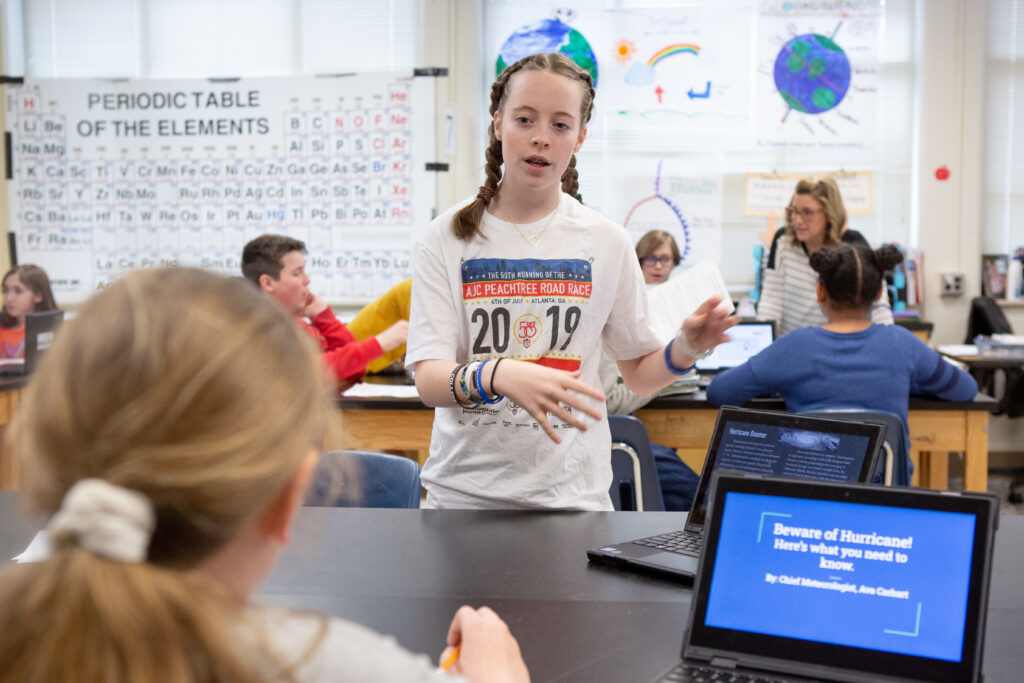
This year, we asked proposal submitters to prioritize student agency and voice in their rubric responses — and the field answered that invitation seriously. Over half of all proposals touch on student agency and voice in some meaningful way. Sixty-one include student presenters themselves. That is not a niche interest or an artifact of our framing. That is a field-wide orientation, and one we take seriously.
What it reflects is something research has long established but practice has been slow to operationalize: students are not the recipients of personalized learning design, they are essential co-designers of it. When more than half the field submits proposals centering student agency, we’re seeing the emergence of a new professional norm — one that asks educators and leaders to consistently ask “what students experience, need, and think?” before designing anything.
Building on feedback from last year’s Symposium, and some self organization from intrepid student attendees, we’re thinking hard about how to invite more students into the October conversation. We want to do this in a more meaningful way — not just as subjects of the work we describe, but as genuine participants in the field’s shared inquiry.
The tension hiding in the most popular theme
A strong majority of proposals name grading as a central challenge in competency-based learning implementation. Only 18 proposals — a strikingly small share of the pool — directly address grading reform as their primary focus.
We don’t read that gap as indifference. We read it as something more interesting. Traditional letter grades are in structural conflict with a desire to measure and support the growth of competence. Families resist change they don’t recognize. Colleges and employers want transcripts that look familiar. The rural school that has rebuilt its mastery progressions across three grade levels faces the same transcript problem as the large urban district running a multi-school competency redesign — same conflict, very different structural resources for solving it. And despite years of real innovation in pockets of the field, we haven’t converged on a shared approach — not on report cards, not on transcripts, not on how to communicate mastery in ways that build rather than erode public trust.
That gap may be telling us that this is a place where the field knows what the problem is and is still honestly unsure about the solution. We don’t want to talk around that at the Symposium. What would it mean to design an experience that goes directly at this tension — not a showcase of polished solutions, but a structured, honest reckoning with why grading reform has been so resistant, and what conditions have actually enabled breakthroughs where they’ve happened? Who needs to be in the room for that conversation to be productive? We’d genuinely love your thinking.
Assessment as the connective tissue
Zoom out from grading specifically and the picture gets even more interesting. When you look at assessment design broadly — how schools define, measure, and communicate mastery — nearly three in five proposals touch the theme in some form. It shows up across all six strands and all implementation contexts: elementary schools building mastery progressions from the ground up, high schools redesigning transcripts, districts trying to communicate competency to college admissions offices, policy advocates making the case for new accountability frameworks.
That breadth is a signal worth following. The field’s most urgent, most cross-cutting unresolved question may be something like: How do we know it’s working — for which students, and who decides? That question connects assessment design, equity accountability, student voice, and the field’s broader purpose. It doesn’t resolve neatly, and it shouldn’t. That’s exactly what makes it worth taking seriously across our strands in October.
What we’re thinking about for October
As we look across this year’s proposals and across the strands we’ve organized for October, what strikes us most is the degree to which a single unifying theme runs beneath all of them: the move from demonstrating that competency-based learning can work to understanding how to make it work for every student, in every context, and at lasting scale. We’re thinking hard about how to make that through-line visible and generative across the Symposium experience — so that what happens in the Practice strand and what happens in the Policy strand are in genuine dialogue, not just parallel tracks.
The proposals keep pointing us toward connections that don’t happen often enough. Rural and urban districts are working on versions of the same problem — grading, mastery communication, building adult buy-in, sustaining momentum when leadership turns over. They are addressing these challenges with different resources, under different constraints, and with insights that would genuinely change each other’s thinking. They should meet each other. That, as much as anything, is what the Symposium is for.
We’ll be sharing more about the Symposium program in the coming months. In the meantime, we want the people who submitted proposals this year — selected or not — to know that what you shared contributed directly to how we are thinking about the field’s most important questions. The act of articulating your work, naming what you’ve learned, and describing what you still need is genuinely useful to the collective picture we are all trying to build together. Thank you for that.
If you read this and have a reaction — to the grading question, to what it would take to connect across the contexts we’re describing, to what we might be missing — we want to hear it. The conversation is open.
Finally, be sure to put this year’s FullScale Symposium on your calendars. We can’t wait to see you in Indy!