
This is the second post in a three-part series exploring community-centered and competency-based education at Morgan Elementary. The first post introduced the school and its context. The third post will examine Morgan’s competency-based learning model in greater depth.
At Morgan Elementary, the idea of being a “community school” is not a standalone initiative or a new label layered onto existing practices. Instead, it reflects a long-standing orientation toward relationships, shared responsibility, and whole-child development. The school functions as a hub where students, families, educators, and community members come together around a shared commitment to children’s learning and well-being.
As we described in our opening post for this series, six practices define community schools. These are:
- Powerful student and family engagement
- Collaborative leadership and shared power and voice
- Expanded and enriched learning opportunities
- Rigorous, community-connected classroom instruction
- Culture of belonging, safety, and care
- Integrated systems of support
This post explores the ways in which Morgan Elementary enacts these six key practices in its daily work.
Powerful Student and Family Engagement
“Families and students actively participate in the school community and are key partners in decision-making, shaping the school’s environment, priorities, and partnerships. Families’ lived experiences and wisdom inform approaches to student success.” (Community Schools Coalition)
Several years ago, Morgan Elementary was offered the opportunity from the district to build an entirely new school facility. The existing building is an amalgamation of additions made over decades, anchored by an original stone structure, affectionately known as the “rock building,” constructed more than a century ago. The wooden classrooms in that original wing are not “high-tech,” and even the path to the gym requires stepping outside.
Yet, when Derek DiStefano, the newly appointed principal at the time, shared the opportunity with community leadership, the opposition was firm. The Morgan Elementary building, and the learning it houses, belong to the community. That sense of shared ownership runs so deep that families were ready to roll up their sleeves and invest in improving the existing building rather than lose a piece of their collective identity.
Families are the cornerstone of Morgan, and are the reason their CBE model could take root and grow. They are integrated into all aspects of school, from school events to small group instruction with community members, to off-duty police officers serving lunch. On the day of our visit, families formed a line that wrapped around the building to attend the school’s Winter Extravaganza.
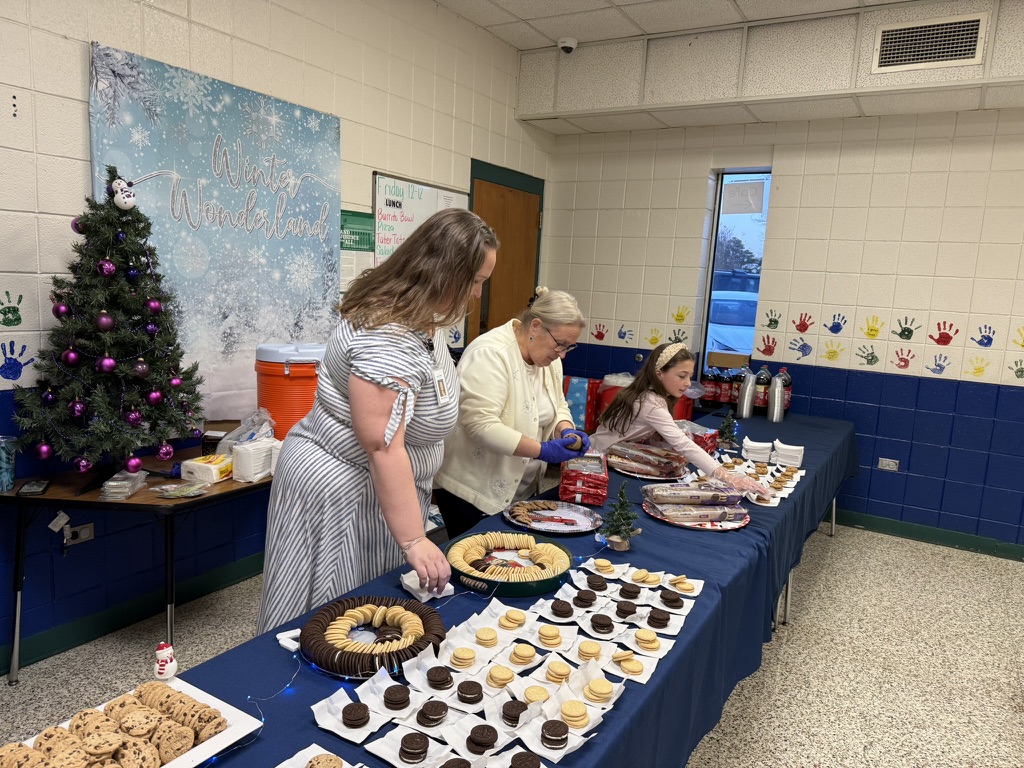
Parents, grandparents, aunts, uncles, siblings, and various members of the Morgan Elementary community poured in to join in celebrations of music and art while enjoying cookies and punch. The halls were bustling with multiple generations, many of whom attended the school themselves. There was warmth, camaraderie, and collective pride in students’ demonstrations of learning.
Collaborative Leadership and Shared Power and Voice
“Families, students, teachers, principals, and community partners co-create a culture of professional learning, collective trust, and shared responsibility as they make decisions together.” (Community Schools Coalition)
Leadership at Morgan Elementary is intentionally distributed. While the principal sets a clear vision and tone, teachers, support staff, students, and families all play important roles in shaping how the school operates. Educators describe a strong culture of collaboration, where decision-making is guided by shared values rather than top-down mandates.
Teachers frequently reference a mindset of co-teaching and collective responsibility. Even though classrooms may be organized around specific teachers, there is a strong sense that all teachers are teaching all students. Referencing her co-teacher, one teacher described, “My kids are her kids, and her kids are my kids. I think there’s that understanding within the building that these are all our kids, no matter what grade you’re in.” This shared ownership is particularly evident in how staff approach instruction, student support, and problem-solving. Teachers collaborate regularly to review student progress, adjust grouping, and coordinate supports, reinforcing the idea that no student belongs to a single classroom or adult alone.
Students are also invited into leadership in age-appropriate ways. In classrooms, students help set norms, reflect on their learning, and support one another. Schoolwide routines, such as student-led announcements and assemblies, elevate student voice and model shared responsibility. Over time, these experiences build students’ confidence and sense of agency within the community.
Families and community members contribute to leadership through ongoing dialogue and partnership. When new initiatives are introduced or changes are considered, school leaders emphasize listening and relationship-building. This collaborative approach has been especially important as Morgan has shifted away from traditional grading and pacing structures. Leaders describe investing significant time in building understanding and trust, recognizing that shared power requires transparency and mutual respect.
Importantly, family engagement at Morgan is not limited to families with the most time or resources. Educators are intentional about meeting families where they are, recognizing that work schedules, transportation, and other responsibilities can limit participation in traditional ways. Communication happens through multiple channels, and staff members emphasize flexibility and responsiveness rather than rigid expectations.
Expanded and Enriched Learning Opportunities
“Before- and after-school, weekend, and summer programs provide expanded time, expanded staffing, and expanded opportunities for learning and engagement. Students have opportunities to explore their passions, dive deeper into the application of academic content, and strengthen their knowledge and skills.” (Community Schools Coalition)
Expanded learning opportunities at Morgan Elementary largely happen during the school day, through special experiential learning experiences like Discovery Days, and through school clubs, which students sign up for based on their interests. These clubs–like drama and BrickEd–give students additional spaces to explore interests, collaborate with peers, and take on new roles.
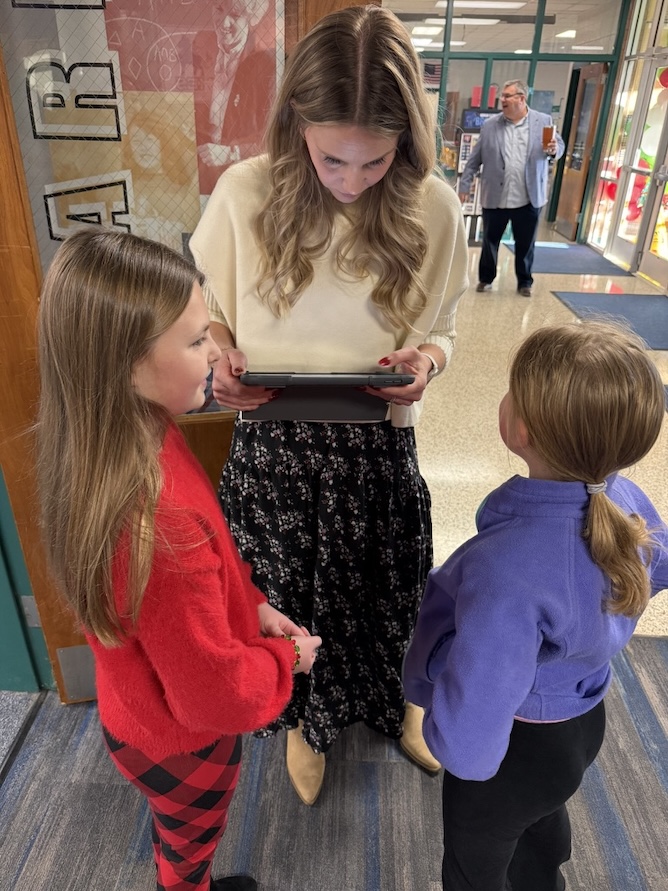
In addition to clubs, students in levels 4-5 are able to participate in school-based leadership opportunities, such as the Digital Media Team, Good Morning Morgan, and the Media Minions. Students involved in the Good Morning Morgan crew produces the daily Good Morning Morgan broadcast. Students write scripts, operate equipment, film segments, and edit content, developing skills in communication, collaboration, and technology. They also take pictures of school events throughout the year and help with the yearbook. Media Minions support the school library, by checking books in and out, reshelving returns, and helping the librarian. These special experiences extend learning beyond traditional classroom tasks and allow students to apply academic skills in authentic contexts.
Rigorous, Community-Connected Classroom Instruction
“Teaching and learning in the school infuses high-level content and skills with real-world learning opportunities. The curriculum is deeply connected to the local community and students’ identities, cultures, and experiences, providing opportunities for students to engage in meaningful inquiry-based learning and problem-solving.” (Community Schools Coalition)
Providing more real-world learning experiences is an area Morgan is eager to explore further. Principal DiStefano and his team began researching competency-based learning in 2019, and acknowledges that the school’s transition has taken several years, progression from traditional grading to standards-based grading to their ultimate arrival at a CBE model. This meant investing time and energy in building the structures, mindsets, and shared language necessary to support this transformational learning and assessment model. As a result, less attention has been devoted to this part of the work: intentionally designing instruction that explicitly connects academic content to students’ lives beyond the classroom.
The intentional stepwise transition has built a solid foundation. School leaders and teachers explained that meaningful community-connected learning must be built on a strong instructional and relational foundation. Ensuring that students feel safe, known, and confident in their learning—and that teachers have the tools to respond flexibly to individual progress—has been a necessary first step. With those conditions increasingly in place, educators see new opportunities to turn their attention outward, connecting classroom learning more intentionally to students’ experiences, interests, and the broader world.
Currently, the school is piloting project-based learning with fourth- and fifth-level students to explore more authentic, interdisciplinary learning experiences. While still in its early stages, the pilot reflects a growing interest in making learning more explicitly connected to real-world contexts and signals a readiness to take the next step in this area.
Culture of Belonging, Safety, and Care
“The school climate is welcoming and fosters trust among students, families, partners, and staff. Each person in the school community is valued for their rich diversity of experiences and is encouraged to share their views, knowledge, and culture.” (Community Schools Coalition)
A strong culture of belonging, safety, and care shapes daily life at Morgan Elementary. From the moment students arrive in the morning, they are greeted by name, hugged, and welcomed into the day. These routines are not performative; they reflect a deeply held belief that relationships are foundational to learning—and that a welcoming climate is something you build through daily practice.
One focus of the district’s Renewal designation is ensuring every student develops seven interpersonal skills: creativity, leadership, teamwork, civility, work ethic, communication, and problem-solving skills. At Morgan, they spotlight a different interpersonal skill each month and spend each morning learning about and practicing that skill. Throughout the month, students actively work to apply those skills as teachers observe their progress. At the end of the month, students self-reflect on their development and teachers also provide feedback on an interpersonal skills rubric. Each class also chooses a “superstar” to highlight who has gone above and beyond in their demonstration of that skill. These students have a special lunch where their families are invited to join. As one student reflected, “It helps us understand how important those [skills] are for our lives.”
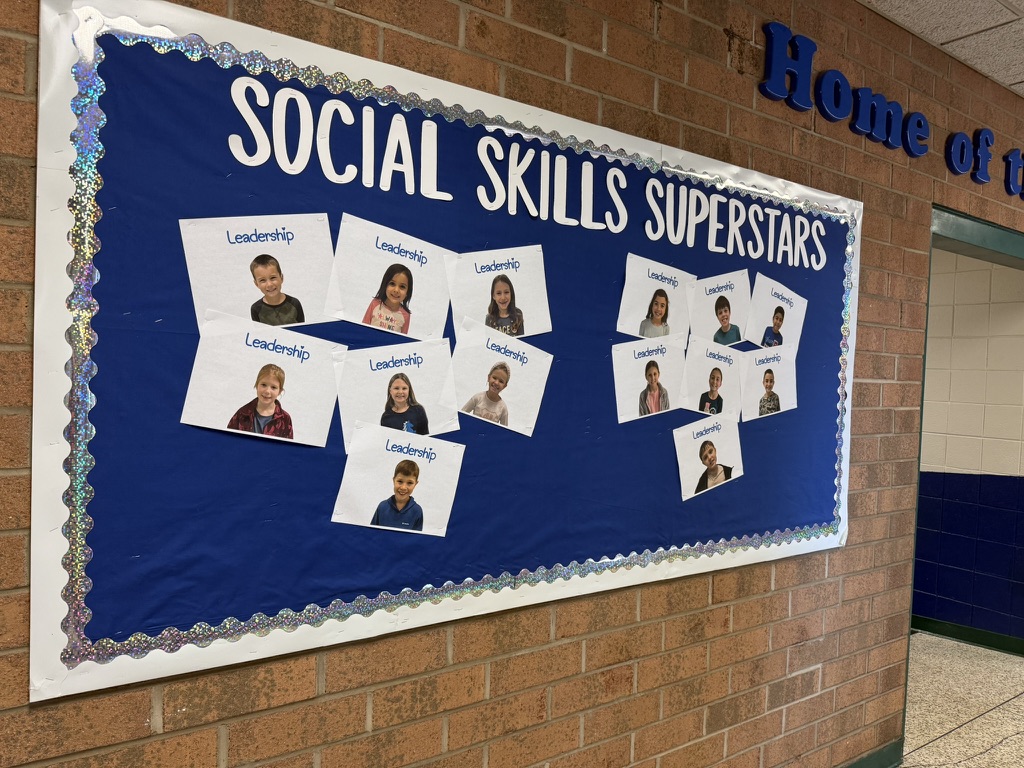
This shared language around interpersonal growth helps build trust across the school—students know what is expected, adults have a common way to notice and name strengths, and families are invited into celebrations that reinforce what the school values. Morgan Elementary’s counselor is also visible throughout the school day, leading social-emotional learning sessions in every classroom, and inviting students to sign up using a Google Form to have individual sessions. Students spoke openly about taking advantage of those 1:1 opportunities without any fear of stigma that’s often associated with getting help. Together, these practices contribute to a welcoming school climate where trust is built across the community.
Integrated Systems of Support
“A dedicated team composed primarily of school staff and community partners intentionally and systematically coordinates services, supports, and opportunities that foster individual and collective well-being, using an assets-based approach to nurture the strengths and address the needs of students and families.” (Community Schools Coalition)
Morgan Elementary’s integrated systems of support reflect a proactive, coordinated approach to meeting student and family needs. The school has established structures for monitoring student progress academically, socially, and emotionally, ensuring that concerns are identified early and addressed collaboratively.
An MTSS coordinator works closely with staff to review data regularly and plan interventions. Special education services are coordinated with classroom instruction, and teachers collaborate to provide targeted support throughout the school day. As discussed, the counselor plays a visible role in the school, delivering weekly classroom lessons and facilitating small-group interventions when needed.
Community partnerships further strengthen these systems. When families face challenges related to clothing, food, or other basic needs, the response is often collective and immediate. One shining example of this is the school’s back-to-school shopping trip. As part of Morgan’s broader transformation process, the leadership team felt strongly that every student should begin the school year feeling excited and confident. For many students, that confidence starts with having new clothes, shoes, and school supplies—especially when families may not be able to afford them.
To make this possible, the leadership team partnered with local faith-based organizations to raise funds, allowing the school to bring 50 students to local retailers such as Old Navy and Rack Room Shoes for back-to-school shopping. The retailers embraced the effort, offering additional discounts so the school’s dollars could stretch further. As a result, Morgan is now able to support upwards of 100 students each year. After the shopping trip, students return to school to also select a new backpack filled with supplies. Principal DiStefano proudly describes the tradition as one of his favorite ways to support the well-being of all students, and ensure “on the first day of school, there’s a level playing field. Everybody walks in with that feeling of preparedness.”
Community Schools as a Foundation for Learning
At Morgan Elementary, the six practices of community schools operate together as a coherent system. Powerful relationships enable shared leadership. Shared leadership supports responsive instruction. Responsive instruction is strengthened by integrated supports. Together, these elements create conditions where students are known, supported, and challenged.
This community-centered foundation has been essential as Morgan has shifted toward competency-based education. The trust, relationships, and shared responsibility cultivated through community schools practices make it possible to rethink traditional structures and focus more deeply on individual students’ learning.
In the next post in this series, we will explore how Morgan’s community schools approach intersects with its competency-based education model, examining how mastery, pacing, assessment, and personalized support come together to shape students’ learning experiences.