
When William Osler introduced grand rounds at Johns Hopkins in 1889, the model was radically interactive. Patients were present, students gathered at the bedside, and learning unfolded through observation, questioning, and the shared work of making sense of real cases. It reflected a clear theory: physicians learn best not by absorbing information at a distance, but by working through problems in context, with colleagues, in relation to actual patients.
Over time, as the field tried to scale, the model shifted. Patients disappeared, slides appeared, and inquiry gave way to lecture. By the 1990s, research confirmed the consequences: traditional continuing education—conferences, workshops, rounds—rarely changed clinical practice. Knowledge transfer was real; behavior change was not.
The issue wasn’t quality but design. Information alone is insufficient to shift practice. In response, medical education evolved—toward simulation, case-based learning, and redesigned convenings grounded in how professionals actually learn.
We’ve been thinking a lot about that arc as we prepare for this year’s FullScale Symposium.
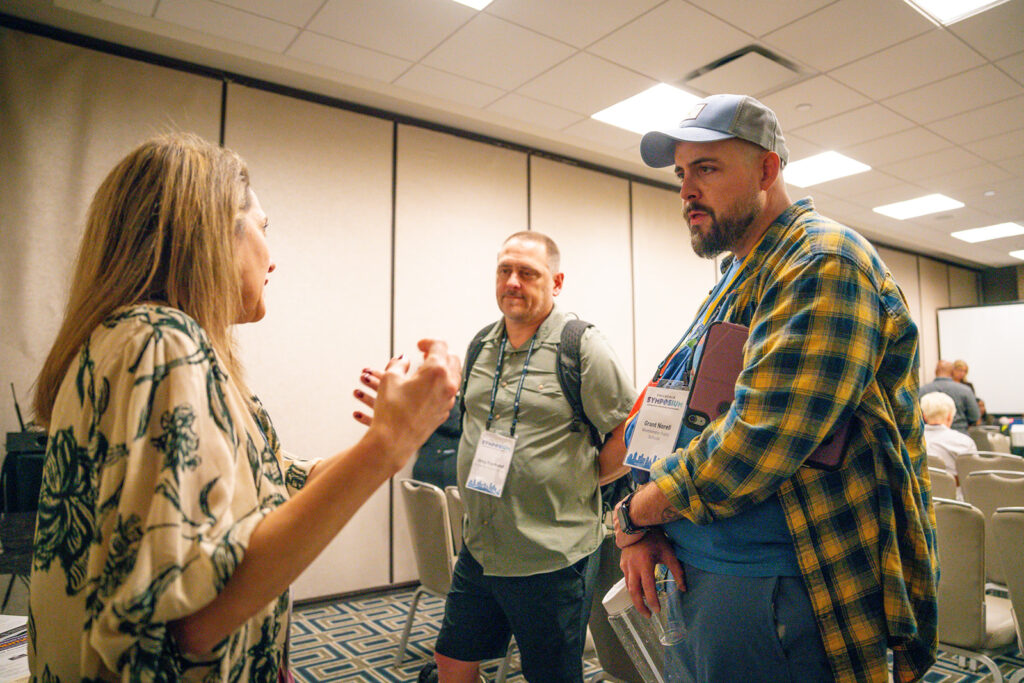
The Symposium has a long history — one that predates our creation of the unified FullScale. For more than two decades, this annual gathering has been a convergence point for some of the most committed practitioners, researchers, policy leaders, and system builders in K-12 education: people who believe the status quo is insufficient for kids and families, and who are doing the hard, often invisible work of building something better. It has been a place to learn what others are doing, to share what’s working, to connect across roles and geographies and sectors, and to leave feeling less alone in this work.
That matters. The Symposium’s legacy — what it has meant for this field and participants past and present — is real and worth carrying forward.
As FullScale takes shape, we’ve found ourselves asking a harder question: How might the Symposium deepen its role as the field’s gathering space while also becoming a catalyst that advances the field to action? This challenge has required us to rethink and begin to redesign Symposium for this next decade of work. This year, we’re making some moves– hops and skips, mostly– to begin that work.
First, a structural experiment in a conference format historically organized around content tracks rather than community roles. At FullScale, we hold a clear belief about how significant transformation happens in K-12 education: it requires people, practice, policy, and measures of progress working in concert. Practitioners doing innovative work in isolation from the policy environment that shapes their conditions won’t move systems. Policy change without a field of practice ready to implement it doesn’t stick. Neither can gain real traction without the data and evidence infrastructure to know what’s actually working and for whom.
We call this the “Four Ps”, and it’s the organizing logic of everything we do to drive more personalized, competency-based, and whole-child system transformation.
This year, we’ve built the conference around dedicated hubs and experiences explicitly structured for each of the Four Ps. Practitioners can go deep on what works in classrooms and schools. Policy leaders have spaces designed for the conditions and systems questions they’re navigating. Researchers and analysts have a home for evidence, measurement, and the tools that help us understand progress. And across all of it, we’ve designed for connection between these communities — because that’s where the real work happens: at the seams, where a district leader and a researcher and a policy advocate find themselves working on the same problem from different angles and realize they need each other.
The most significant new program this year is the launch of Learning Labs, designed to move participants from gathering to action. Conference-goers often describe the same pattern: three days of ideas, a notebook full, dozens of connections—and then a return to Monday morning where the system remains unchanged. The energy dissipates. The problem isn’t inspiration; it’s translation.
Learning Labs are built to address that gap. Designed for district and system leadership teams—superintendents, cabinets, and senior instructional leaders—the Labs span the full conference arc. Teams begin with a structured pre-conference session to clarify priorities and define what progress should look like. During the Symposium, facilitated touchpoints and technical assistance help teams interpret what they’re learning in relation to their own context. A post-conference debrief ensures they leave with a concrete plan and a peer cohort for accountability.
The goal is straightforward: not just better ideas, but usable action.
Beyond Learning Labs, we’re also testing some other strategies to help make Symposium a place of greater connectivity and action.
The first, perhaps paradoxically, is looking back and celebrating progress. We’re reintroducing formal recognition of excellence in the field through the FullScale Awards — a celebratory program on the final day of the Symposium that names the educators, system leaders, and ecosystem change agents doing meaningful, often underrecognized work to advance powerful learning for all students. Attendees will select a Community Choice Award winner from among this year’s showcase presentations, giving the whole community a stake in who gets recognized. We believe this field deserves to see itself reflected at its best — and the people doing transformational work deserve to be named by a community that genuinely understands what it means.
The second is showcases: we’ve also redesigned how emerging work gets shared with greater emphasis on helping people learn quickly and connect that learning to active networking. This year’s showcase format is structured for speed, interactivity, and connection — less like a formal presentation track, more like a live forum where practitioners and researchers can share work in progress and find the collaborators and questions they didn’t know to go looking for. The field has no shortage of good ideas. What it often lacks is the right conditions for those ideas to find each other.
We’re learning as we go and are committed to keep learning and changing. The Symposium’s legacy — decades of bringing the field together — is best honored by asking what it could do next, not just what it has done before. The work of transforming K-12 education is long. The moments when the people committed to that work find each other, make sense of what they’re learning, and leave more ready than they arrived are rare and worth getting right.
Finally, we’re thrilled to announce that we also have brought in a new senior leader to take these early ideas and tests powerfully into the future. We’ve welcomed Juliana Finegan as our new Chief Product Officer. She’ll be leading our work to create and sustain the resources, tools, and platforms, like Symposium, that FullScale needs to scale impact and access for partners across the K-12 education field. We’re so excited to have her at the helm of this event.
That’s what we’re building toward. We’d love to hear what you’re hoping for as we do, and we can’t wait for your feedback. See you in October!
The FullScale Symposium 2026 will be held this October 8-10 in Indianapolis. Learn more and register here.